Hi, I’m Xander van Pelt. I’m a maker, builder, and full-stack developer passionate about creating tools that solve real problems. I started coding at 13, reverse-engineering game engines and crafting small 2D Java games before diving into full-stack development, AI integration, and automation systems.
I’ve built projects like ClassroomFeed, which automates Google Classroom data into AI-driven weekly summaries; the MekongMemo pipeline, a multi-agent LLM system that aggregates and synthesizes regional news; and TutorBoard, an app used by teachers and students to streamline class information; and more to come… My projects have taught me how to integrate Google APIs, design relational databases, deploy scalable backends, and weave large language models into functional systems safely and effectively.
Alongside web systems, I’ve explored optimization research, signal processing, and graphics programming, driven by curiosity about how math, code, and art converge. I’m currently pursuing IB Diploma HLs in Chemistry, Physics, and Math AI, and plan to study Mechanical or Computer Engineering in university, where I can merge my passion for intelligent systems, automation, and design.
Next, I’m working on creating a morphological latent space representing to model Jansen linkage parameters and foot trajectory similarities.
Read my recent post on creating systems that utilize LLMs here or my exploration into Fractal PCA based image compression here.
Projects and Creations
ClassroomFeed.com
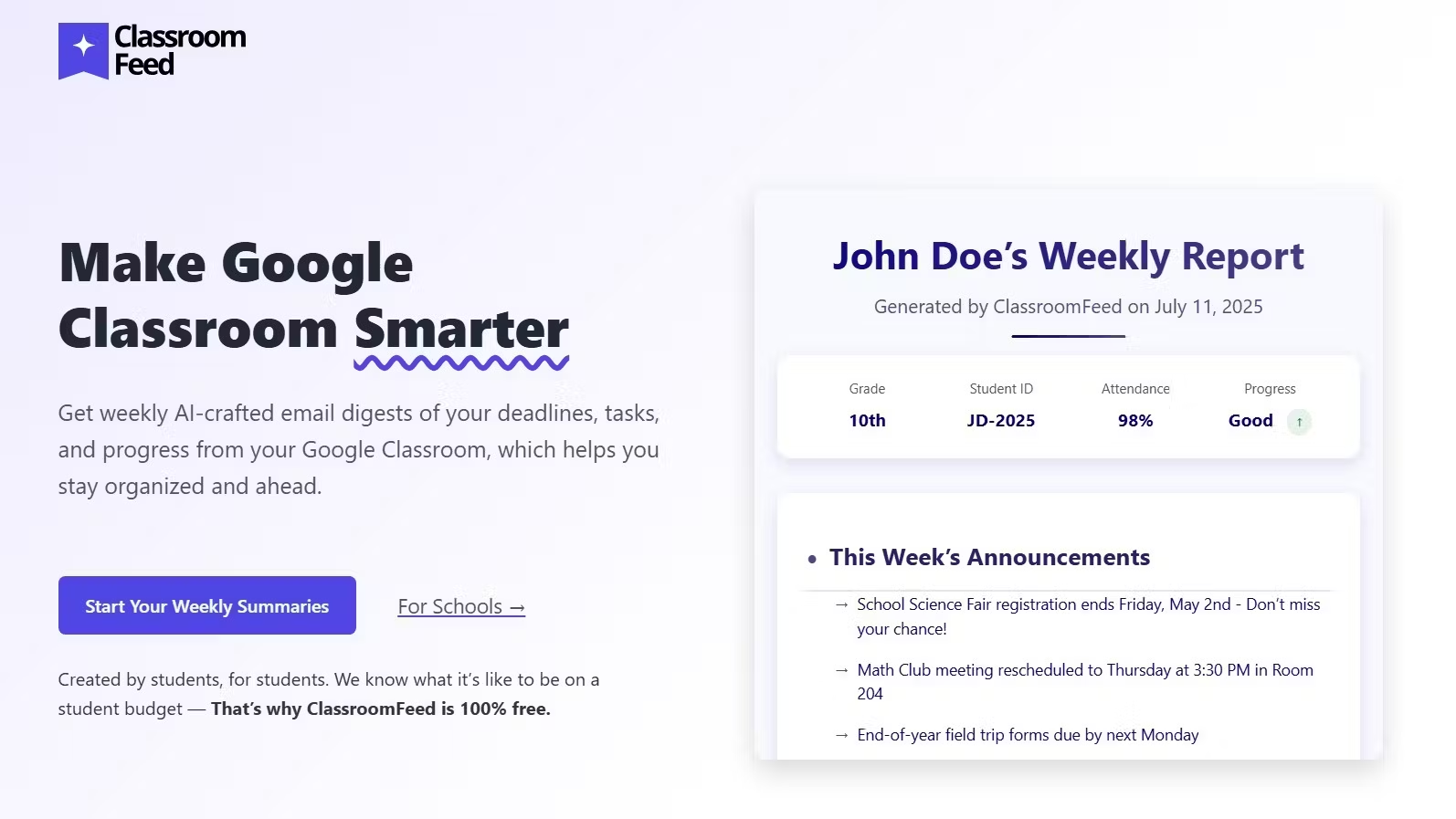
After getting tired of scrolling through 10 separate Google Classroom feeds and forgetting about deadlines, I decided to automate with a Google Classroom API–integrated app that uses AI, your inbox, and some magic to generate weekly progress reports, reflections, and recaps on what work you’ve missed, completed, or is soon to come. AI tracks reflections and progress over the weeks using the data you provide it.
This gave me the skills to:
- Work with Google APIs, the Google developer ecosystem, OAuth 2.0 integrations
- Automate email sending using the Mailgun API. Custom-implemented email invites, SSR for unsubscribe tokens, and progress-sharing capabilities
- Build a multi-framework and server backend, using Express.js for authentication and web-related purposes, and a Python Flask server for interfacing with OpenAI APIs and Mailgun APIs via Axios to the Express.js server
- Develop a React.js frontend
- Apply LLM prompting, context management, and integration into complex systems; LLM safety considerations were taken against prompt injection, etc.
- Implement a MySQL storage system with a multi-table relational database to store complex user information
- Full-stack deployment across Vercel and Railway
- Apply SEO skills and optimization
With a growing user base in over 10 schools across the world, this SaaS project has been a culmination of my technical skills applied in a real-world context, providing an actual product with appeal.
ClassroomFeed.com
(Repository is private, DM or email to request viewing)
MekongMemo Automation Pipeline
Developed a proprietary interface and system to aggregate, scrape, store, categorize, score, group, and synthesize stories from multi-perspective publication narratives sourced from RSS feeds across Southeast Asian countries. The system uses a Discord bot as a front/interface to operate the robot. Coded 100% in Python with MySQL for storage. Anthropic and OpenAI LLM API integrations, LLM prompting.
I worked on this project over the summer at 16–17 years old, where I developed a pipeline for creating and synthesizing multiple multi-perspective articles from varied news sources into a single newsletter. This project was completed at a time when “vibe-coding” and using AI to write the majority of code (beyond just debugging) was not a thing. I’m taking full credit for writing every single line of this one.
This project taught me:
- How to web-scrape, circumventing measures that many sites use
- HTTP networking
- Using NLP in tandem with LLM models to organize 600–800 articles per round, separating narratives and stories
- Employing LLMs to categorize, summarize, score, isolate perspectives, curate, and synthesize the newsletter
- How to integrate complex systems and pipelines using Discord as a “front”
- The system has generated first-draft newsletters for the MekongMemo (mekongmemo.com) for nearly 2 years
- The newsletter has over 42,000 reads per month, 3,000 subscribers, and posts articles each day of the week
Mekong Memo Newsletter
(Repository is private, DM or email to request viewing)
Neutron Java Game Engine
One of my first large-scale passion projects. I began this endeavor at 14 years old. After competing in a Game Jam, I fiddled with Unity and watched a tutorial but was fed up with the black-boxed, abstract tool I was wrestling with. I wanted to work with my bread and butter: raw code. Though others had submitted entries full of 3D models and fancy shaders, my game was crude; it wasn’t good and won me nothing. But in retrospect, that game—a bouncing blue square among red enemies—made me realize my true passion. It wasn’t about making a pretty or super fun game, but about all the implementation nitty-gritty along the way. Considering things like whether a projectile should ask an enemy “are you dead?” or whether the enemy should broadcast “I’m dead” to anyone listening—that was the real game I wanted to play.
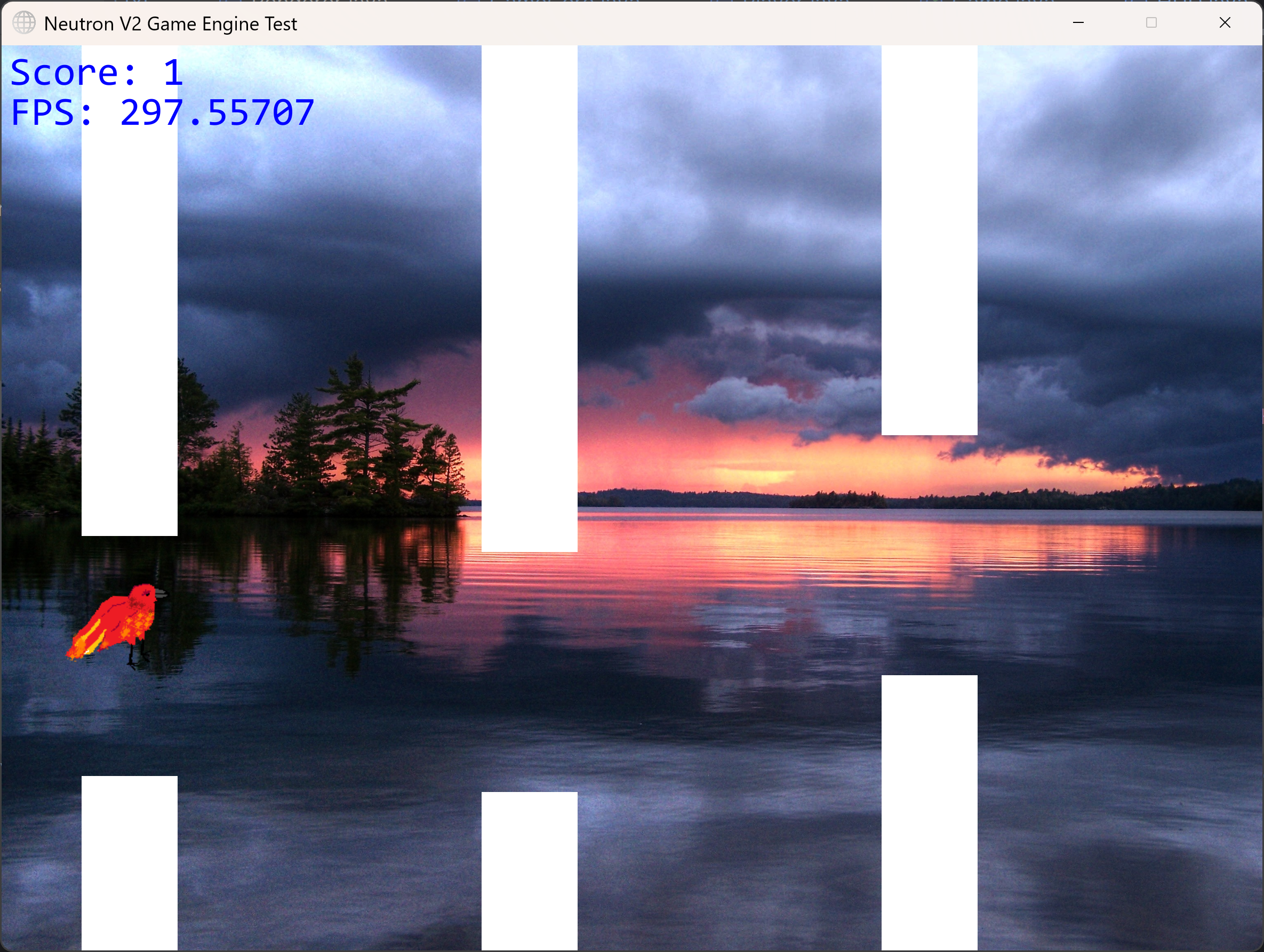
I programmed pixel shader code, collision checks, and game loops by reading articles, Stack Exchange posts, watching YouTube videos, and learning Object-Oriented Java. I find game engines to be the most beautiful expression of Object-Oriented Programming. I have a fully working Flappy Bird demo, with collisions, audio, UI, etc., up on my repo.
This game taught me the absolute core and bread and butter of object-oriented programming. I look back in nostalgia at the inspiration and passion this project brought. It became a black hole of implementation specifics and system-level considerations. Every system to implement was a delicious puzzle, truly. I love this project.
I learned:
- Object-Oriented Programming (interfaces and inheritance of methods, etc., in Java)
- Shader code, game engine loops, collision mechanics, rendering systems, UI, input systems
- How to abstractify anything
- Lower-level programming, implementing physics, serialization basics
Research Paper Comparing Optimization Methods for Jansen’s Linkage
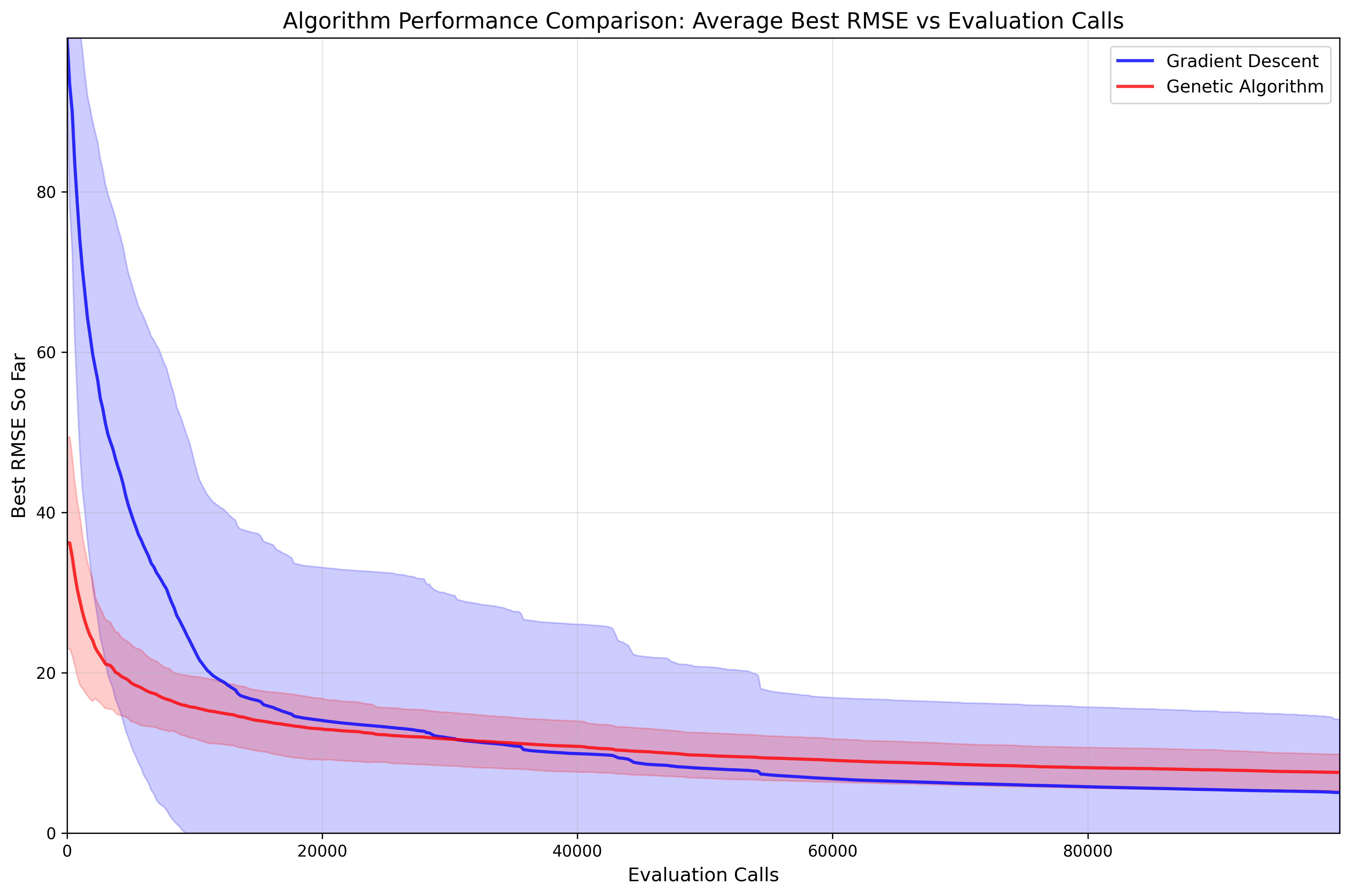
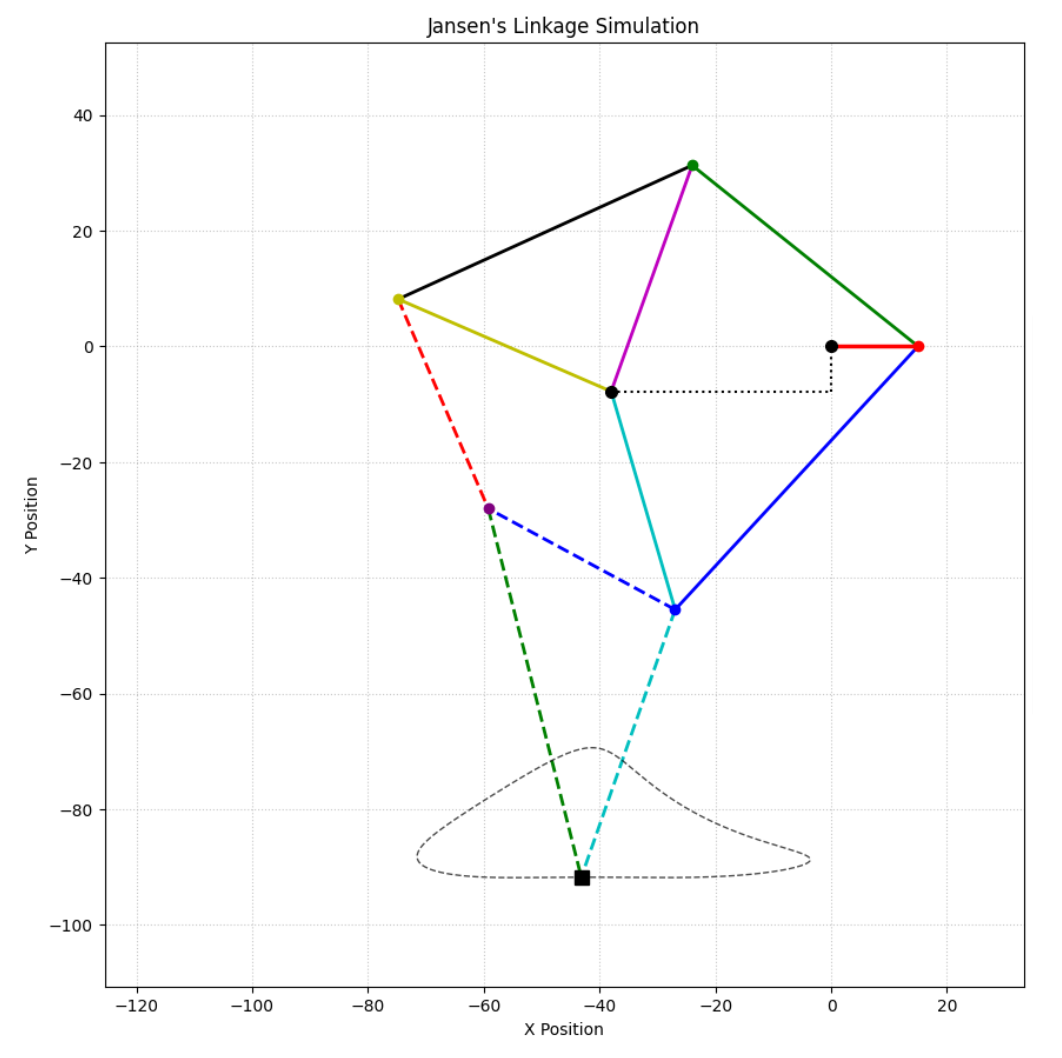
Optimizing Jansen’s linkage proportions to achieve a desired foot trajectory using a gradient descent and genetic-based approach and comparing effectiveness, measured in final RMSE between the desired path and actual.
This project began as an applied problem for comparing GD and GA for my IB Extended Essay (it was overkill), but after completing it, I thought I should publish it as a full research project because the idea was novel (though by no means cutting-edge).
I created numerical simulations to model Jansen’s Linkage, implemented gradient descent using approximated finite-difference gradient methods, and used PyGAD for the genetic implementation. I learned the essentials of optimization, multivariable differential calculus, and extended my personal learning into neural network training I had done.
This project taught me:
- How to model error surfaces
- Forward vector kinematics simulations
- Very detailed knowledge on fundamental vanilla optimizations
- Simulation stability and algorithmic convergence on a solution
- Literature review
- How to research and compose a full research and study paper
- Matplotlib!
The full paper is available here: Zenodo Publication
Code is here: GitHub
HHIS TutorBoard
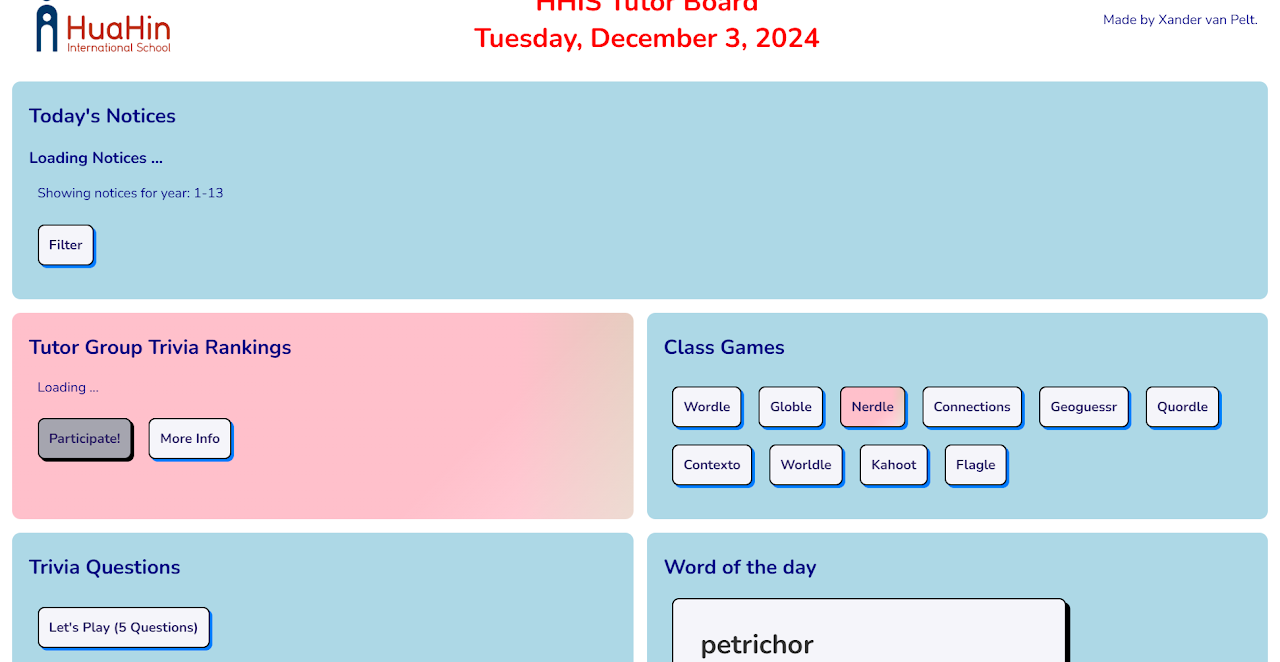
I started this project at the beginning of my IB course. Frustrated with Google Classroom’s shortcomings and the disorganized notification and announcement system in my class (a maze of emails, notices, and word of mouth), I wanted to create a solution that brought all these information sources into one coherent system, designed for morning tutors to read through with the class. I applied the skills I learned from building the MekongMemo pipeline to this project.
- My first frontend-heavy project, where I used React.js and vanilla CSS to create the beautiful single-page interface
- JWT authentication system for teachers
- Google Classroom API integration and cron job–scheduled scraping using a Python script
- LLMs to handle duplicate announcements, remove first-person wording, summarize, and comprehend attached images or text in Google Classroom posts
- APIs integrated to handle weather data collection, random country flags, quiz questions, etc.
- My first full-stack app, deployed fully on Render.com (for $3/month)
The skills I learned here allowed me to apply them to ClassroomFeed.com. Teachers and students loved the app—they used it to check air quality, filter announcements for their class specifically, and circumvent the scattered and cluttered previous system.
Website
(Repository is private, DM or email to request viewing)
Full article on what I learned about building AI systems from this
PCA Based Transform With Fractal Patches for Image Compression
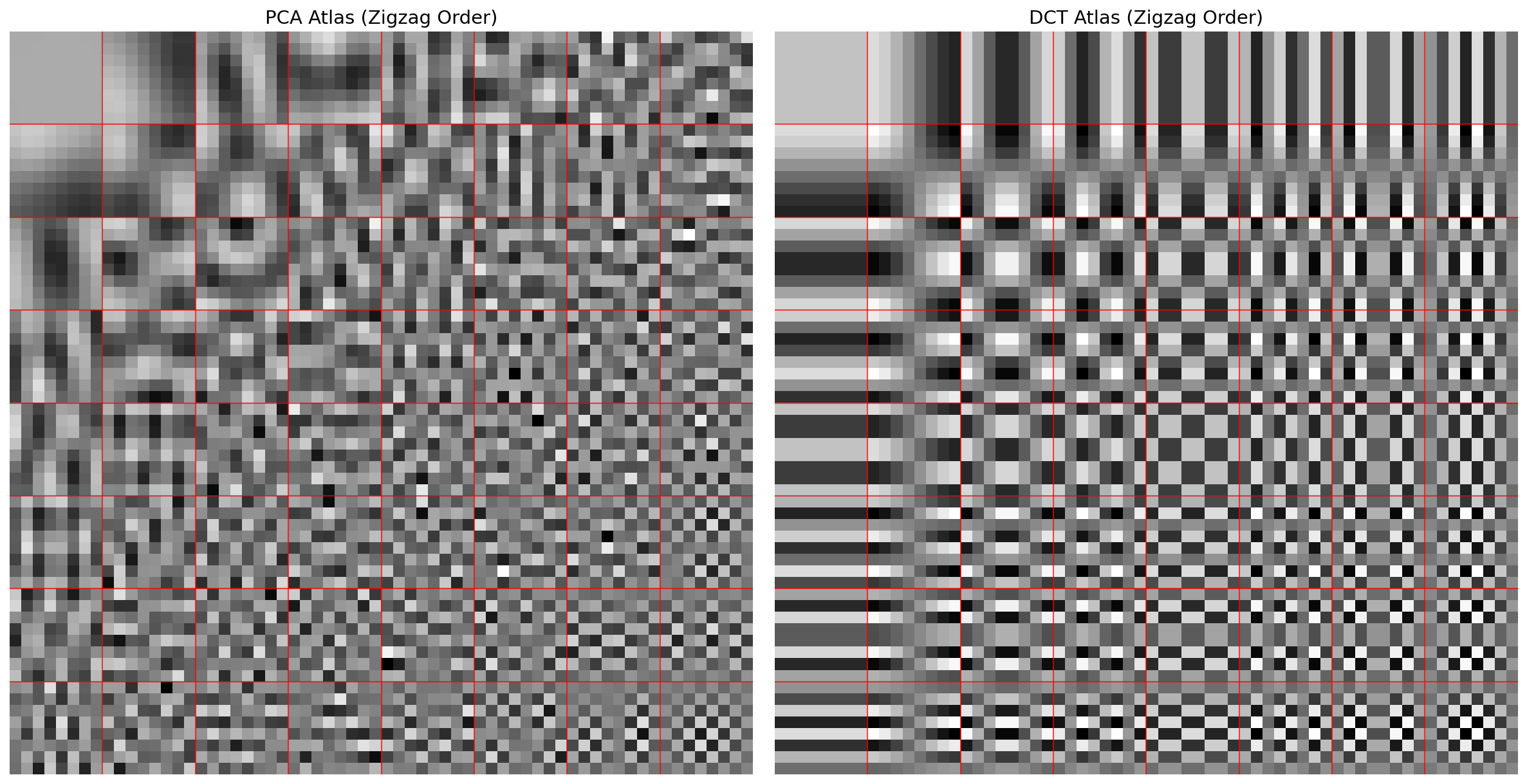
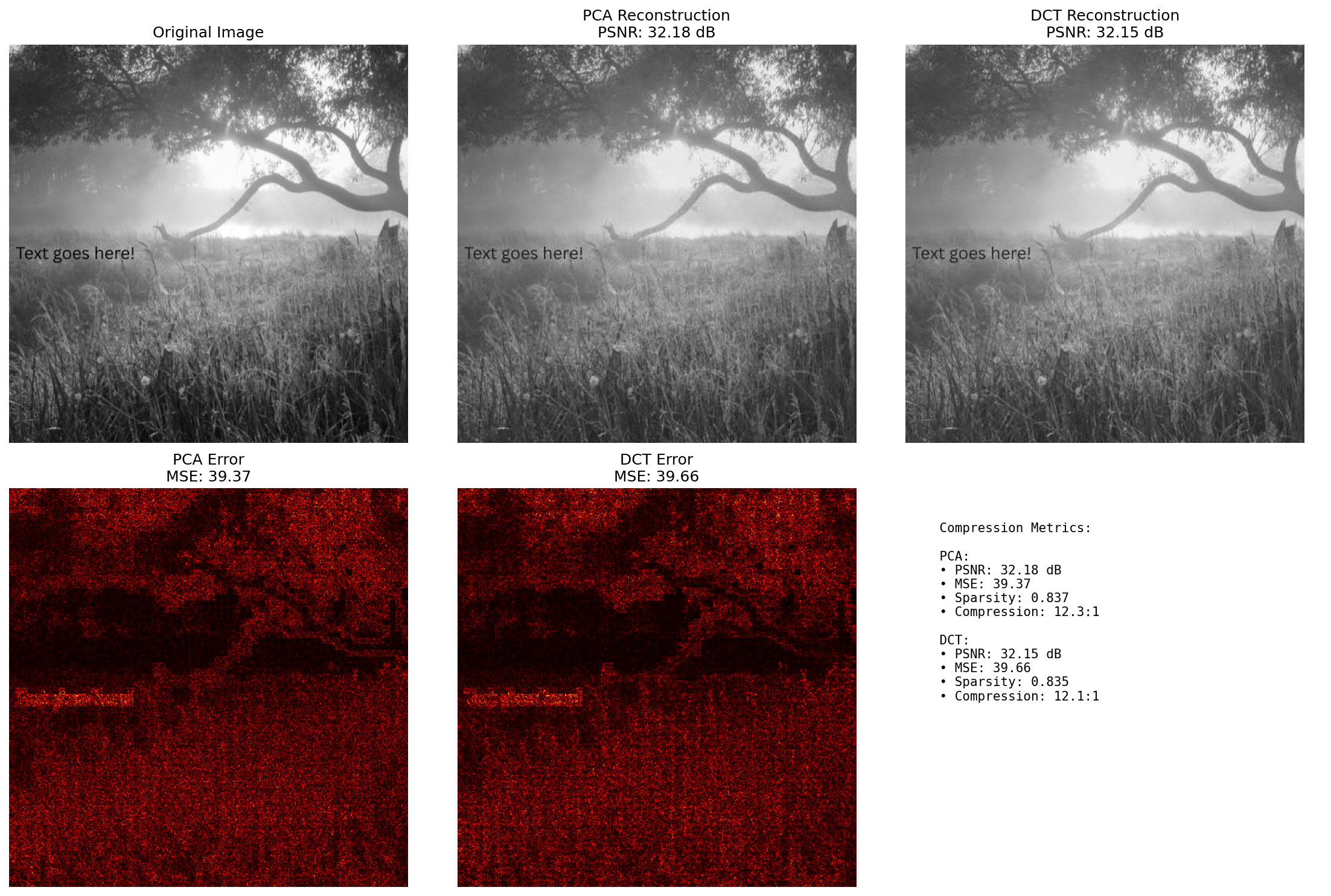
After being obsessed with DCT compression (the math behind JPEG image compression) over summer, I began experimenting with what I could do by modifying the basis vectors. I had the idea to replace the basis vectors with ones that were “learned” to capture more information with fewer basis vectors (to maximize energy compaction on a per-image basis). After experimentation and research, I realized PCA would yield the exact basis vectors I required.
The final compression didn’t perform noticeably better than JPEG and required storing the basis vectors in the image header, which cost precious bytes. Quantizing the basis vectors was also an option, but that led to a trade-off between quality loss and space saved from storing the basis vectors as integers. Instead, I explored a tangential idea using a fractal-based system to subdivide the usual 8×8 patches used in JPEG further if an algorithm found that section had sufficient detail to require subdivision. The final result was interesting, but the borders between subdivided parts showed an obvious difference in quality, making the result look blocky.
Though the project wasn’t a success, I still learned:
- Transforms
- Applied vector and linear algebra
- Signal processing basics
- Literature review
Full article I wrote on this
Art and Creation in Blender and Unreal Engine


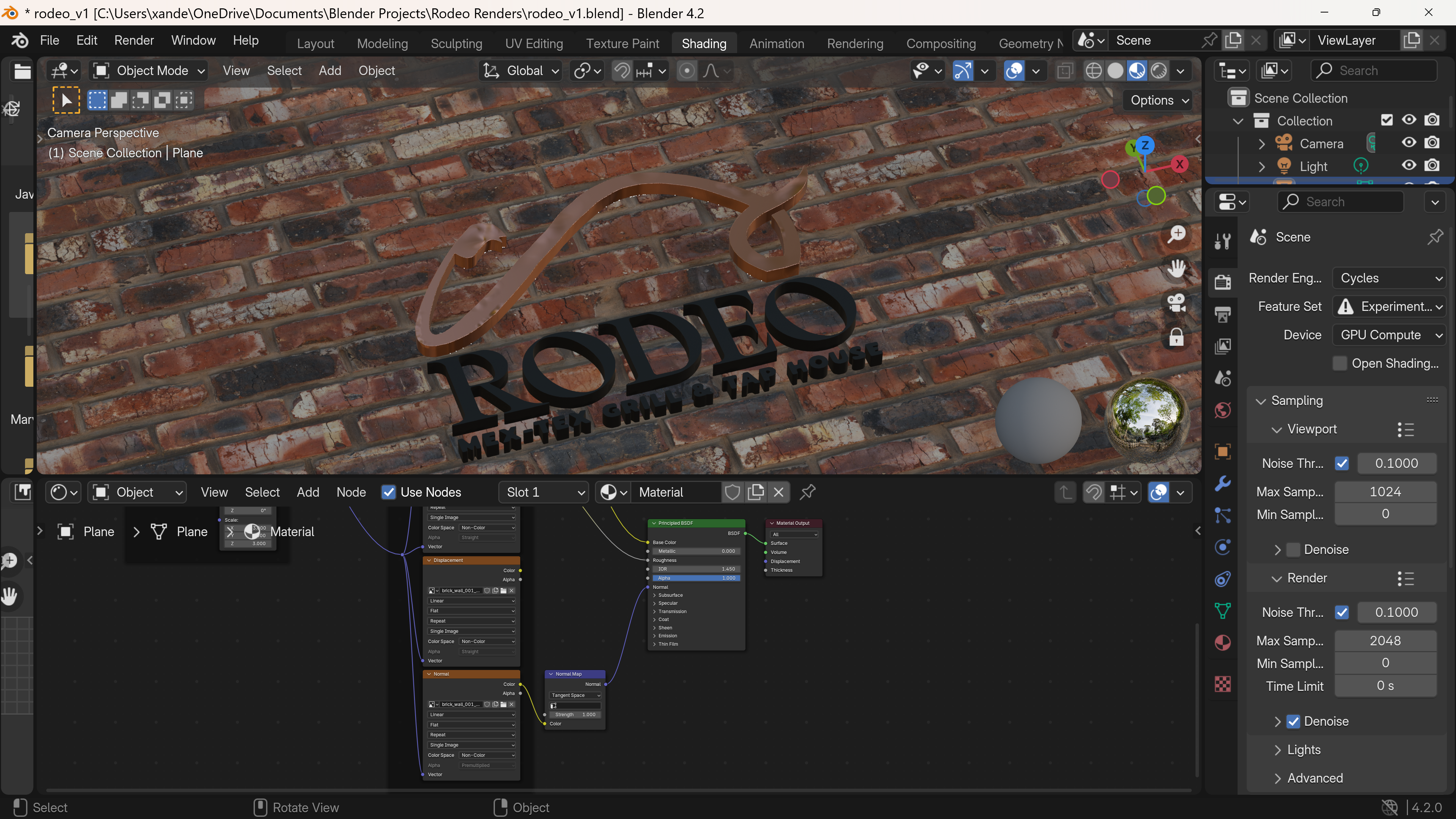
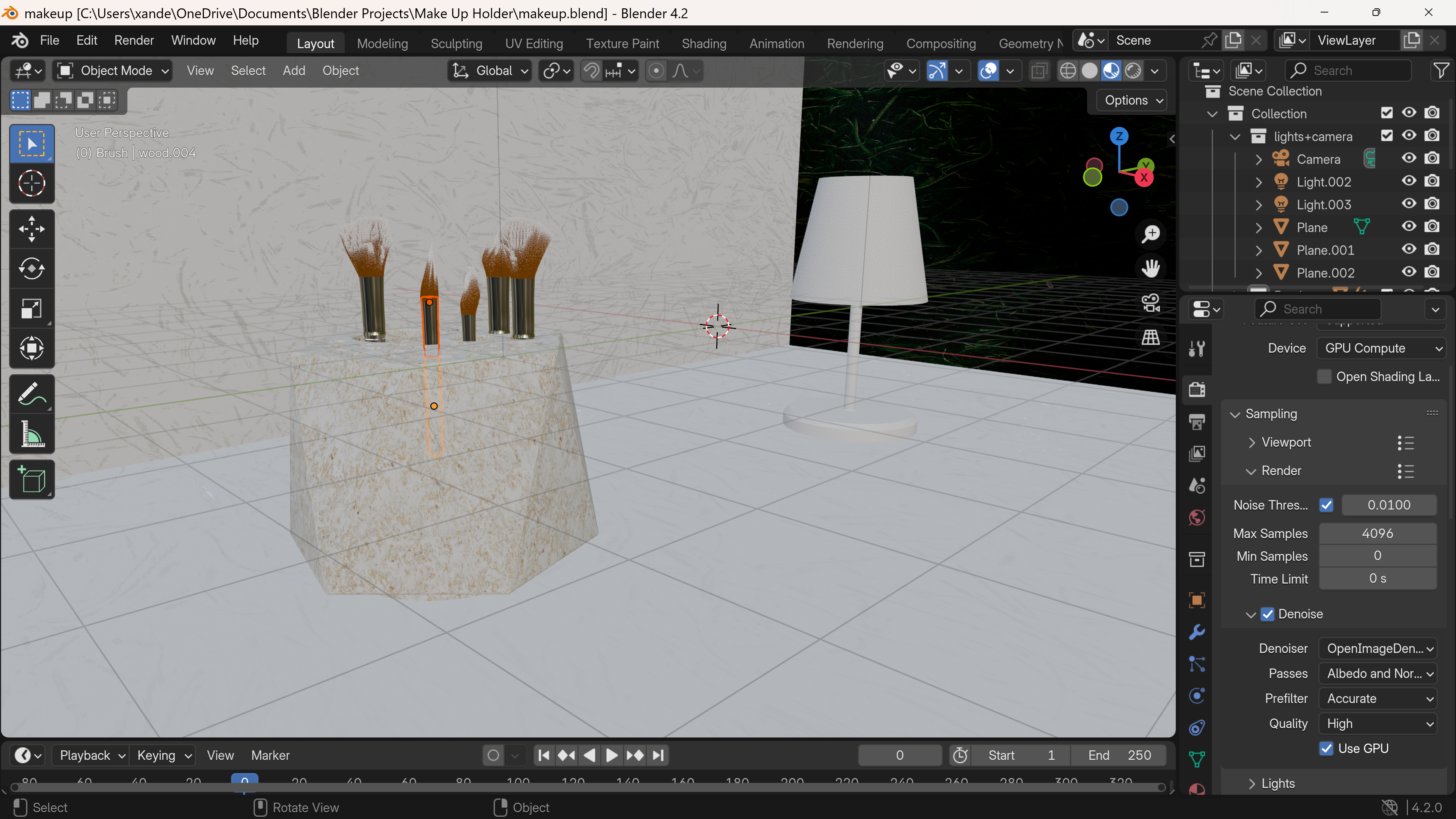
I have always had an interest in 3D modelling and scene creation as a form of creating art. I have made some product renders for friends and family, shown above. In Unreal Engine, I have created a Middle Eastern desert scene, with interiors and lighting. I know the basics of lighting, 3D modelling, and how to write shaders and use these tools. I learned:
- The basics of 3D modelling
- How to texture and shade objects
- Rendering and 3D lighting basics
- Blender and Unreal Engine basic proficiency
Java Sand Simulator and Cellular Automata
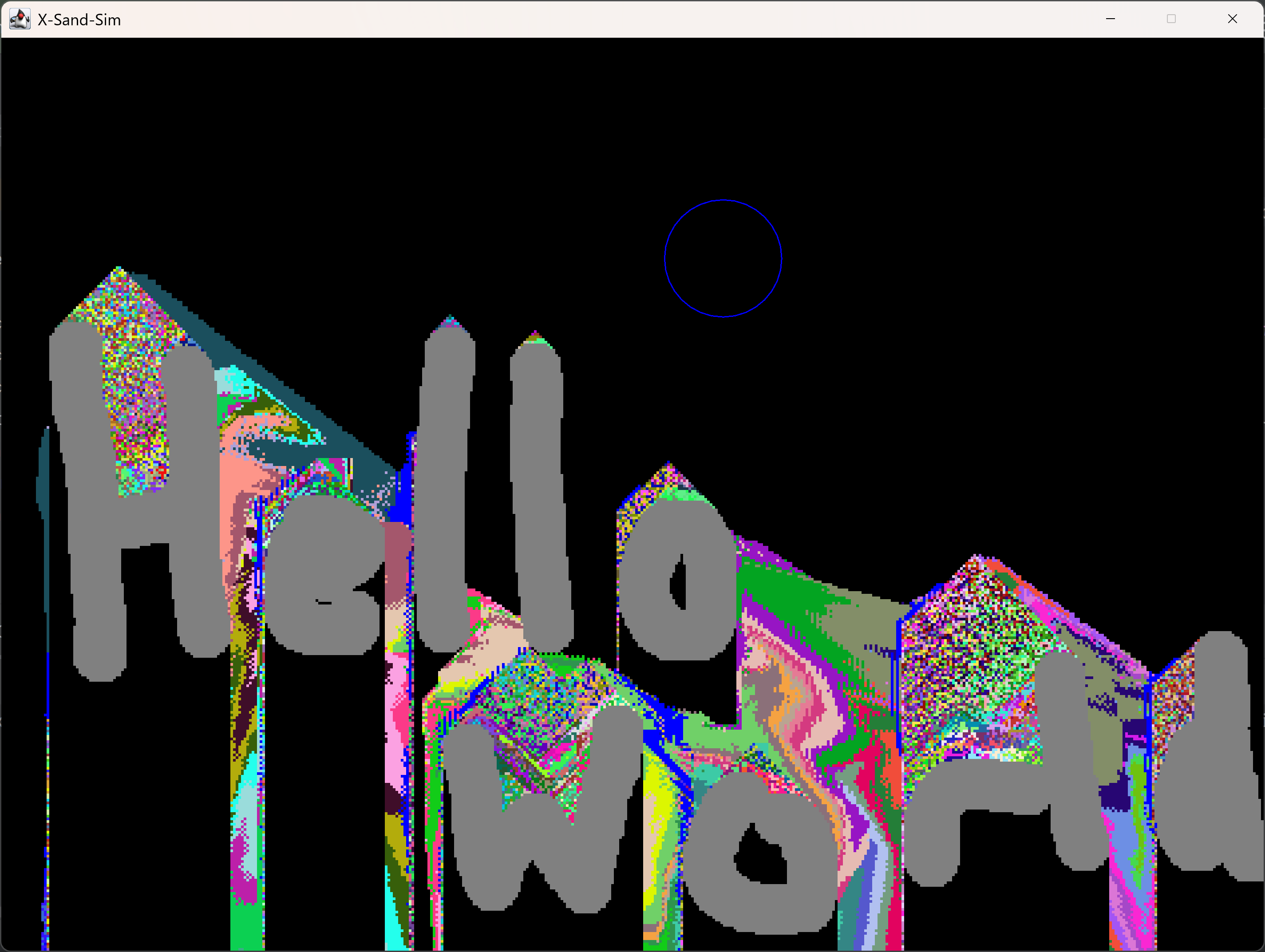
Created a Cellular Automata-based rule set to create a sandbox simulation. Modeled water, sand, and rock. Per-pixel-level handling of physics.
Taught me:
- Optimization considerations
- Physics modelling
- Cellular Automata
Modern Take on Rosenblatt’s Perceptron

After learning about how the most basic neural models work, and inspired by the Perceptron created by Frank Rosenblatt in 1957 with manual wiring and actual photosensors, I wanted to try to build a binary classifier, but with modern Python. With no data structures or Python libraries for machine learning of any kind, I tried to build it from the ground up because I wanted to understand at a fundamental level how it worked.
From this project I learned:
- How neurons in machine learning work
- How neuron layers and weights actually learn to identify key features
- Neural network basics from a fundamental level
- More complex data structures in Python
Here’s the result: Repository
Lazy MySQL Wizard
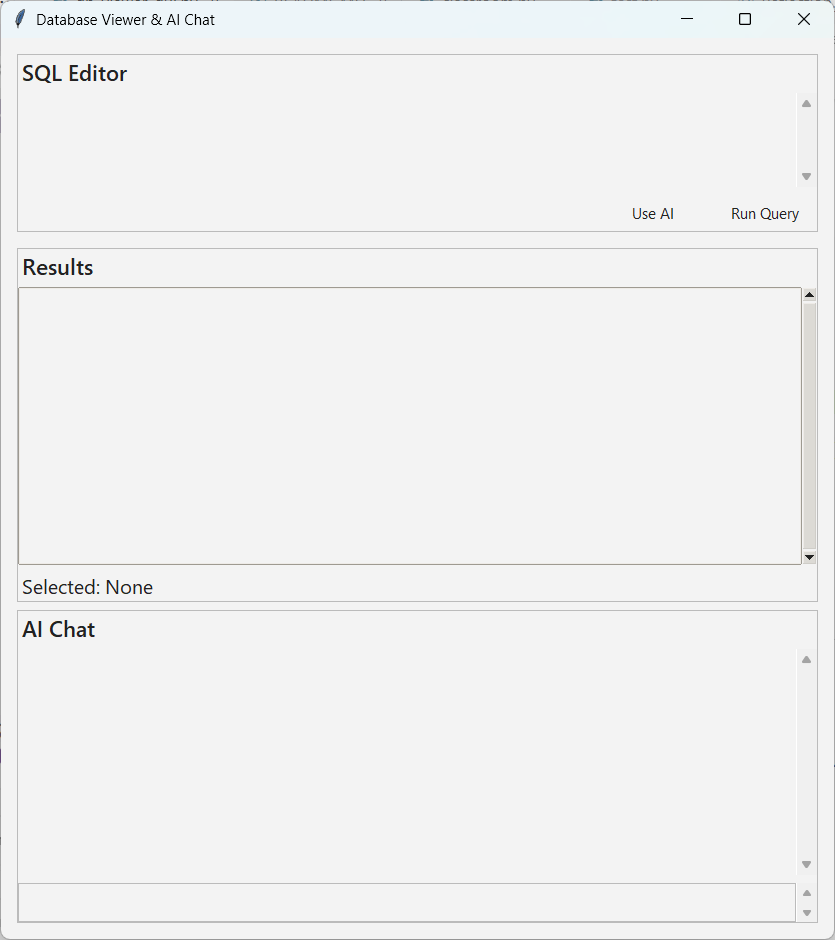
Too lazy to learn MySQL and finding myself prompting AI on how to execute certain actions on a database—always having to re-enter my database’s schema—I decided to build essentially a ChatGPT wrapper with a MySQL table viewer and interface. Now making changes to your database is as easy as a prompt and as transparent as a neat table.
Taught me:
- Python GUI and Tkinter
- More AI integration
- Ironically, some SQL
Work Experience
Vimarn Suriya Co. Ltd.
I engineered and computationally solved the problem of allocating the most optimal and favorable parking spaces to residents of the new 69-story Dusit Residential tower.
Private real estate invoice and email automation software
Developed an invoice automation sending system for local real estate business. —
Skills Profile – Xander van Pelt
Full-Stack Development
- Frontend: React.js, vanilla CSS, single-page applications, responsive UI/UX design
- Backend: Node.js/Express.js, Python Flask, multi-framework server architectures
- Databases: MySQL, multi-table relational database design, complex data modeling
- Deployment: Vercel, Railway, Render.com, full-stack application deployment
- APIs: REST API design, Axios, integration of third-party services
AI & Machine Learning Integration
- LLM Systems: OpenAI API integration, prompt engineering, context management, safety considerations (prompt injection prevention)
- Natural Language Processing: Article categorization, summarization, narrative isolation, multi-perspective synthesis
- Neural Networks: Fundamental neuron models, weight training, feature identification
- AI-Driven Automation: Combining NLP with LLMs for large-scale content organization (600-800 articles per processing round)
Google Ecosystem & OAuth
- Google APIs: Google Classroom API, comprehensive OAuth 2.0 implementation
- Google Developer Platform: API integration, authentication flows, secure token management
- Automation: Cron job scheduling, automated data scraping and processing
Web Technologies & Automation
- Web Scraping: Circumventing anti-scraping measures, HTTP networking, RSS feed aggregation
- Email Automation: Mailgun API, custom email invite systems, SSR for token management
- SEO: Search engine optimization, web performance optimization
Research & Optimization
- Optimization Algorithms: Gradient descent, genetic algorithms, finite-difference gradient methods
- Numerical Simulation: Forward vector kinematics, physics modeling, algorithm convergence analysis
- Research Methodology: Literature review, academic paper composition, experimental design
- Error Analysis: Error surface modeling, RMSE evaluation, algorithmic stability
Signal Processing & Computer Graphics
- Transform Mathematics: Discrete Cosine Transform (DCT), Principal Component Analysis (PCA), basis vector manipulation
- Image Compression: JPEG fundamentals, custom compression algorithms, quantization techniques
- Linear Algebra: Applied vector algebra, transforms, signal processing
- 3D Graphics: Blender, Unreal Engine, modeling, texturing, shading, lighting, rendering
Game Engine Development
- Low-Level Programming: Game loops, rendering systems, collision mechanics, input handling
- Shader Programming: Pixel shader code, graphics pipeline
- Physics Simulation: Physics implementation, serialization, cellular automata
- Object-Oriented Design: Java OOP, interfaces, inheritance, abstraction patterns
Programming Languages
- Proficient: Python, JavaScript/Node.js, Java
- Frameworks: React.js, Express.js, Flask, PyGAD
Software & Tools
- Development: Git/GitHub, JWT authentication, multi-server architecture
- Data & Visualization: Matplotlib, Tkinter, data structure design
- 3D & Graphics: Blender, Unreal Engine 5
- Collaboration: Discord API integration, system pipeline design
System Architecture & Integration
- Complex System Design: Multi-stage automation pipelines, service integration
- Microservices: Multi-framework backend coordination, server-to-server communication
- Data Flow: End-to-end data processing, storage, retrieval, and synthesis
- Scalability: Handling 42k+ monthly reads, 3k+ subscribers, daily automated publishing
Problem-Solving Domains
- Computational Optimization: Solving complex allocation problems, parameter optimization
- Automation: Building proprietary interfaces for content aggregation and synthesis
- Real-World Applications: SaaS development, user base growth across 10+ schools globally
- Applied Mathematics: Kinematics, cellular automata, transform theory
Additional Competencies
- Security: OAuth 2.0, JWT tokens, prompt injection mitigation
- Documentation: Technical writing, research papers, educational articles
- UI/UX: Single-page application design, responsive interfaces, user-centered design
- Project Management: Large-scale passion projects, multi-year development cycles
Random Mentions

I made my first feature in my school’s (now defunct) student publication, Bangkok Patana Cypher Magazine. My article remains partly visible (but shortened) in this newsletter on page 13. I made a few other articles too (which are now unfortunately lost in the sands of time).
I made my first GitHub commit at 13, working on the now-defunct Hiven (a Discord clone) API, contributing a couple of getId() and getProfileURL() methods in Python.